

A comfortable interface can make it easier to navigate an online gaming platform. Language preferences, screen appearance, text visibility, and device display settings can all influence how users interact with different menus and pages.
This Lotus365 Game Language and Display Settings Guide 2026 explains general ways to understand and manage these preferences while using an online gaming interface.
The exact settings available can vary depending on the platform, browser, device, and version being used. Users should always check the options available on their own device or platform.
What Are Language and Display Settings?
Language and display settings control how information appears on a website or application.
Depending on the available features, these settings may include:
- Interface language
- Text size
- Screen orientation
- Browser zoom
- Device brightness
- Display scaling
- Full-screen viewing
- Accessibility options
Not every platform provides all of these controls directly. Some settings are controlled by the user’s browser or device instead.
Understanding where a particular setting comes from can make troubleshooting easier.
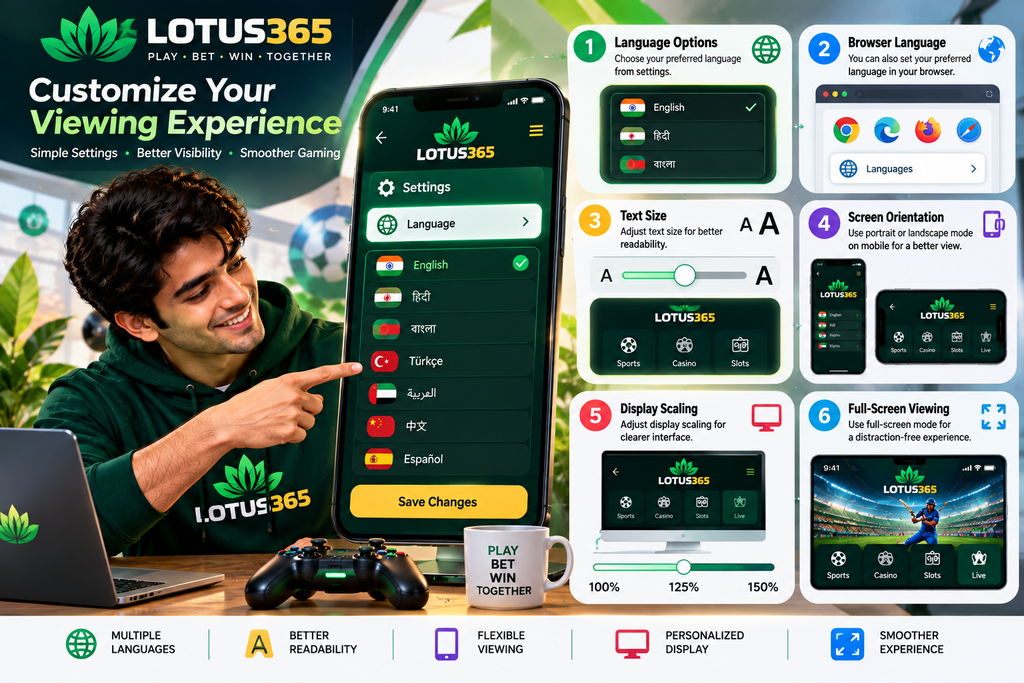
1. Check the Available Language Options
The first step is to determine whether the platform provides a language selector.
If a language option is available, it may appear within an account menu, interface menu, or general settings section.
When checking language preferences:
- Open the relevant settings area.
- Look for language or regional preferences.
- Review the available options.
- Select the preferred language if supported.
- Save the change when required.
- Reload the page if the interface does not update immediately.
If the desired language is unavailable, users should not assume that the platform supports it.
2. Understand Browser Language Preferences
Sometimes the language displayed on a website can be influenced by browser preferences.
Modern browsers may allow users to select preferred languages for websites. If a page appears in an unexpected language, checking the browser’s language configuration can help identify the cause.
However, changing browser language preferences does not guarantee that every website will automatically change its interface language.
The website itself must support the selected language.
3. Adjust Text Size for Better Readability
Text that is too small can make menus and instructions difficult to read.
Users can often adjust text visibility through their browser or device.
For example, browser zoom controls can enlarge or reduce the size of webpage elements. Operating systems may also provide display-scaling or accessibility options.
When adjusting text size, look for a balance that keeps:
- Menus readable
- Buttons visible
- Navigation understandable
- Important information accessible
- Pages properly aligned
Excessive zoom can sometimes cause parts of a webpage to move outside the visible area.
4. Use Screen Orientation on Mobile Devices
Mobile users may view websites in portrait or landscape orientation.
Some interfaces work better in one orientation than another, particularly when several menus or information panels are displayed simultaneously.
If your device supports automatic rotation, you can experiment with both orientations to determine which provides better visibility.
Keep in mind that website behavior can differ between devices and browsers.
5. Check Display Scaling
Display scaling changes how large interface elements appear on a screen.
This can be particularly useful on high-resolution monitors where standard text and buttons may appear relatively small.
Users can review their device’s display settings and adjust scaling according to their preference.
A suitable scaling level should make interface elements comfortable to view without making the page difficult to navigate.
6. Consider Full-Screen Viewing
Some browsers and devices support full-screen viewing.
Full-screen mode can provide additional space by reducing browser interface elements around the webpage.
This may be useful when viewing information-heavy pages.
However, full-screen mode does not change the underlying website layout. If a particular page is not designed for large displays, some elements may still appear differently than expected.
7. Use Device Accessibility Features
Modern smartphones and computers commonly provide accessibility features that can improve readability and navigation.
Depending on the device, these may include:
- Larger text
- Increased contrast
- Screen magnification
- Reduced motion
- Voice assistance
- Color adjustment
- Display scaling
These features are controlled by the operating system rather than necessarily by the gaming platform.
Users should explore the accessibility settings available on their particular device.
8. Troubleshoot an Interface That Looks Incorrect
Sometimes a display problem is caused by the browser rather than the website.
If a page looks unusual, try these general troubleshooting steps:
Refresh the Page
A simple refresh may resolve a temporary loading problem.
Check Browser Zoom
If the page appears unusually large or small, return the browser zoom to its normal level and check the interface again.
Update the Browser
An outdated browser can sometimes create compatibility problems.
Clear Temporary Browser Data
Cached information can occasionally affect how webpages are displayed.
Try Another Supported Browser
Testing the page in another browser can help determine whether the problem is browser-specific.
These steps are general troubleshooting methods and do not guarantee that every interface problem will be resolved.
9. Keep Your Device Display Comfortable
Display settings are not only about navigation. Long periods of screen use can also make comfortable viewing more important.
Users can consider:
- Adjusting screen brightness
- Using appropriate text size
- Taking regular screen breaks
- Avoiding uncomfortable viewing angles
- Keeping the display clean
- Maintaining a comfortable distance from the screen
These simple habits can make general screen use more comfortable.
10. Check Settings After Browser or Device Updates
Browser and operating-system updates can sometimes change existing preferences.
After a major update, users may want to review:
- Browser language
- Zoom level
- Display scaling
- Accessibility settings
- Screen orientation
- Privacy preferences
Reviewing these settings can help identify why a familiar interface suddenly looks different.
Why Consistent Display Settings Matter
Consistent display settings can make navigation more predictable.
For example, if text size changes frequently or browser zoom is accidentally modified, buttons and menus may appear in different locations or sizes.
Maintaining comfortable and consistent settings can make it easier to understand an interface without repeatedly adjusting the screen.
Frequently Asked Questions
What are Lotus365 Game language and display settings?
They refer to language preferences and visual settings that influence how an online gaming interface is displayed. The exact options depend on the platform and device.
Can I change the language of the interface?
If the platform provides multiple languages, the language may be selectable through its available settings. If no language selector exists, browser or device language settings may not change the website.
How can I make game menus easier to read?
You can try browser zoom, device text-size settings, display scaling, or accessibility features supported by your device.
Why does the website look different after a browser update?
Browser updates can affect compatibility, zoom preferences, display behavior, or stored settings. Checking browser settings and refreshing the page can help identify the cause.
Does full-screen mode change the website?
Full-screen mode mainly provides more available screen space. It does not necessarily change the website’s underlying design or features.
Are display settings the same on every device?
No. Desktop computers, smartphones, tablets, browsers, and operating systems can provide different display and accessibility options.
Conclusion
Understanding Lotus365 Game Language and Display Settings can help users create a more comfortable and readable browsing environment.
Language preferences, text size, browser zoom, display scaling, screen orientation, and accessibility tools can all influence how an online interface appears. Because available features differ between platforms and devices, users should check the specific settings available to them.
For technical problems, basic troubleshooting such as refreshing the page, checking browser settings, updating the browser, or testing another supported browser can help identify the source of an issue.