
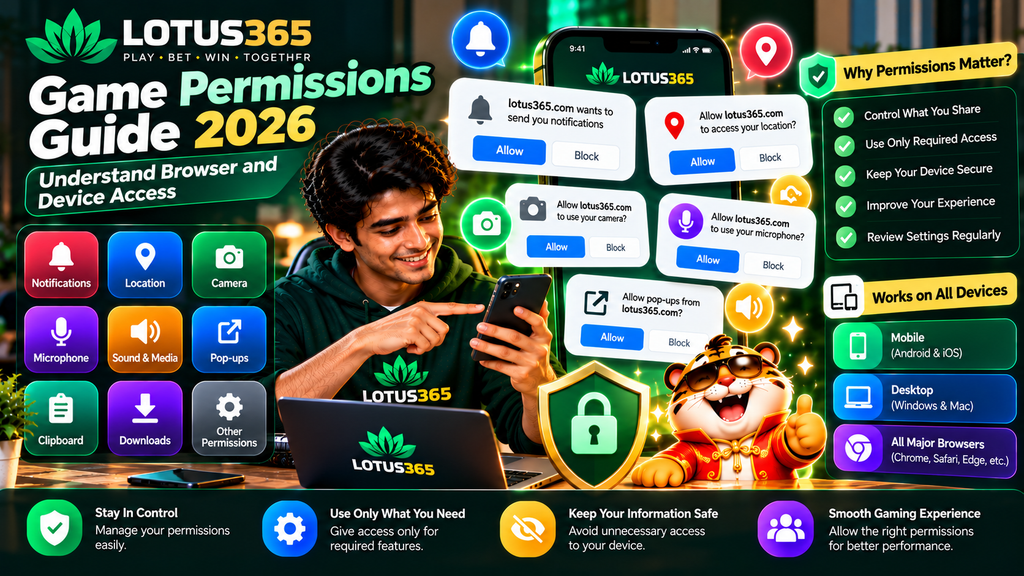
Lotus365 Game Permissions can affect how a website or game interacts with your browser and device. Depending on the feature being used, a browser may ask whether a website can access certain functions, such as notifications, location, sound, camera, microphone, or other device capabilities.
Permission requests can sometimes look confusing, especially when they appear unexpectedly. Understanding what a permission means can help you make a more informed choice before selecting allow or block.
This guide explains common browser and device permissions, why they may appear, what to check before granting access, and how to review permission settings on different devices.
What Are Lotus365 Game Permissions?
Lotus365 Game Permissions are access requests that may appear when a website or browser-based feature wants to use a particular device capability.
A permission does not automatically mean that every feature on a website requires access to your device. Different functions may require different permissions.
Common examples include:
- Notifications
- Location
- Sound
- Camera
- Microphone
- Clipboard access
- Pop-ups
- Automatic downloads
- Device-related features
The exact permissions available can vary depending on the browser, operating system, device, and website functionality.
Why Do Websites Ask for Permissions?
Modern browsers are designed to give users greater control over how websites interact with device features.
For example, a browser may ask for permission before allowing a website to:
- Send notifications
- Access approximate location
- Use the microphone
- Use the camera
- Play certain types of media
- Open pop-up windows
- Access other browser-controlled functions
The purpose of a permission request is to give the user a choice instead of allowing websites unrestricted access.
Common Lotus365 Game Permissions Explained
Different permissions have different purposes. Understanding the basic function of each one can make permission prompts easier to evaluate.
Notification Permission
Notification access allows a website to send browser notifications when supported.
A notification permission may be useful when a website has alerts or other browser-based notifications.
Before allowing it, consider whether you actually want notifications from the website.
Location Permission
Location access can allow a website to determine your approximate location through the browser’s location system.
Location information can be sensitive, so it is worth checking why the feature is requesting access before granting permission.
If a feature does not appear to need location information, you may prefer not to provide it.
Camera Permission
Camera access allows a supported website feature to use the device camera.
A browser normally asks for permission before allowing a website to access the camera.
If you are not using a feature that requires the camera, there may be no reason to grant this permission.
Microphone Permission
Microphone access allows a supported browser feature to use the device’s microphone.
This permission can be relevant to voice-based features or communication tools.
As with camera access, check the purpose of the request before allowing it.
Sound and Media Permissions
Some browser features interact with audio and video.
You may encounter browser controls related to:
- Sound playback
- Autoplay
- Muting
- Media controls
- Audio permissions
These settings can affect how media behaves in your browser.
Pop-Up Permissions
Some websites like Lotus365 Game use pop-up windows for specific functions.
Browsers may block pop-ups by default because unwanted pop-ups can interfere with browsing.
If a legitimate feature requires a pop-up, the browser may provide an option to allow pop-ups for that website.
Only change this setting when you understand why it is required.
How to Review a Permission Request
When a permission prompt appears, do not automatically select Allow.
Instead, take a moment to review it.
Step 1: Read the Request
Look at the permission being requested.
Is it asking for:
- Notifications?
- Location?
- Camera?
- Microphone?
- Another browser feature?
Knowing what is being requested is the first step.
Step 2: Consider the Feature
Think about what you were trying to do immediately before the permission appeared.
If the feature clearly requires the requested capability, the request may make sense.
If the permission seems unrelated to your current action, consider blocking it or checking the browser settings first.
Step 3: Check the Website Address
Look at the website address displayed in your browser.
Make sure you are interacting with the website you intended to visit.
Avoid granting permissions to unfamiliar websites simply because a pop-up appears.
Step 4: Choose the Appropriate Option
Depending on your browser, you may see options such as:
- Allow
- Block
- Ask
- Allow once
- Allow while visiting
- Deny
The exact wording can vary by browser and device.
Can You Change Permissions Later?
In many modern browsers, permissions can be reviewed and changed later.
This is useful if you previously selected an option and later changed your mind.
For example, you may be able to:
- Remove notification access
- Block location access
- Disable camera access
- Disable microphone access
- Change pop-up behavior
- Reset permissions for a website
The exact steps depend on your browser and operating system.
How to Review Browser Permissions
Most browsers provide website-specific settings.
A common approach is to open the website, select the browser’s site information or settings icon near the address bar, and look for permissions.
From there, available options may include:
- Notifications
- Location
- Camera
- Microphone
- Pop-ups
- Automatic downloads
- Sound
The names and available controls vary between browsers.
How to Review Permissions on Mobile Devices
Mobile browsers and operating systems can provide another layer of permission control.
A device may have separate settings for:
- Browser permissions
- Location services
- Camera access
- Microphone access
- Notifications
If a website feature is not working as expected, checking the browser and device permission settings may help identify whether access has been restricted.
However, changing permissions should be based on the feature you actually want to use.
What Does “Block” Mean?
Blocking a permission generally prevents the website from using the related browser capability.
For example, blocking notification permission can prevent browser notifications from that website.
Blocking does not necessarily mean that the entire website becomes unusable.
Some features may continue working normally while others may be unavailable because they depend on the blocked permission.
What Happens If You Block a Required Permission?
If a feature requires a specific permission and that permission is blocked, the feature may not work as expected.
You may see:
- A permission message
- A disabled feature
- A request to change browser settings
- A message explaining that access is required
- No visible change
If this happens, check which permission is involved before changing settings.
Permission Requests and Browser Security
Browser permissions are one part of modern web security.
Instead of allowing every website to access device capabilities automatically, browsers can ask the user first.
This gives users more control over access.
However, a permission request should not automatically be considered trustworthy simply because it appears in a browser.
Always consider:
- Which website is requesting access?
- What permission is being requested?
- Why might the feature need it?
- Do you actually want to use that feature?
- Is the request consistent with what you were doing?
These simple questions can help you make a more informed decision.
Avoid Granting Unnecessary Permissions
A useful principle is to provide only the access that is needed for the feature you want to use.
For example, if you only want to browse game information, you may not need to grant access to device features unrelated to browsing.
Reviewing permissions periodically can also help you keep your browser settings organized.
Permissions on Desktop vs Mobile
The permission experience can differ between desktop computers and mobile devices.
Desktop
Desktop browsers may provide website-specific controls through the address bar or browser settings.
You may have separate controls for:
- Notifications
- Camera
- Microphone
- Location
- Pop-ups
- Sound
Mobile
Mobile devices may combine browser permissions with operating-system controls.
For example, the browser itself may need permission to access location or the camera before a website can use that capability.
This means you may need to check both browser and device settings.
What If a Permission Prompt Keeps Appearing?
Repeated permission requests can happen for different reasons.
Possible causes include:
- The permission was previously blocked
- The browser did not save the preference
- The website needs permission for a particular feature
- Browser settings were reset
- Cookies or site data were cleared
- You are using a different browser or device
Start by identifying which permission is being requested.
Then check the website’s permission settings in your browser.
Should You Allow Every Permission?
No.
There is no general reason to approve every permission request.
A better approach is to consider each request individually.
If a feature needs access and you understand why, you can decide whether to allow it.
If the request is unnecessary for what you are doing, you can choose not to grant access.
Lotus365 Game Permissions Checklist
Before granting a browser permission, use this simple checklist:
- Read the permission request.
- Identify the feature requesting access.
- Check the website address.
- Understand why access may be required.
- Avoid sharing unnecessary device information.
- Review your browser settings when needed.
- Recheck permissions if a feature stops working.
- Remove permissions you no longer want to use.
This process takes only a short amount of time and can make browser management easier.
Common Permission Mistakes to Avoid
Clicking Allow Without Reading
Permission prompts can be easy to dismiss quickly. Always check what access is being requested.
Giving Access to Unfamiliar Websites
Do not approve permissions simply because a website asks for them.
Forgetting Previous Permissions
Permissions can remain active until they are changed or removed. Review them periodically.
Changing Multiple Settings at Once
If you are troubleshooting a feature, change one relevant setting at a time. This makes it easier to identify what solved the problem.
Sharing Private Information
A browser permission should never be confused with providing passwords, verification codes, payment information, or other confidential account details.
How Permissions Can Affect Your Browsing Experience
Permissions can influence how certain website features behave.
For example:
- Blocked notifications may prevent alerts.
- Blocked location access may affect location-based features.
- Blocked camera access may stop camera functionality.
- Blocked microphone access may affect voice features.
- Blocked pop-ups may prevent certain windows from opening.
Understanding these relationships can make troubleshooting easier.
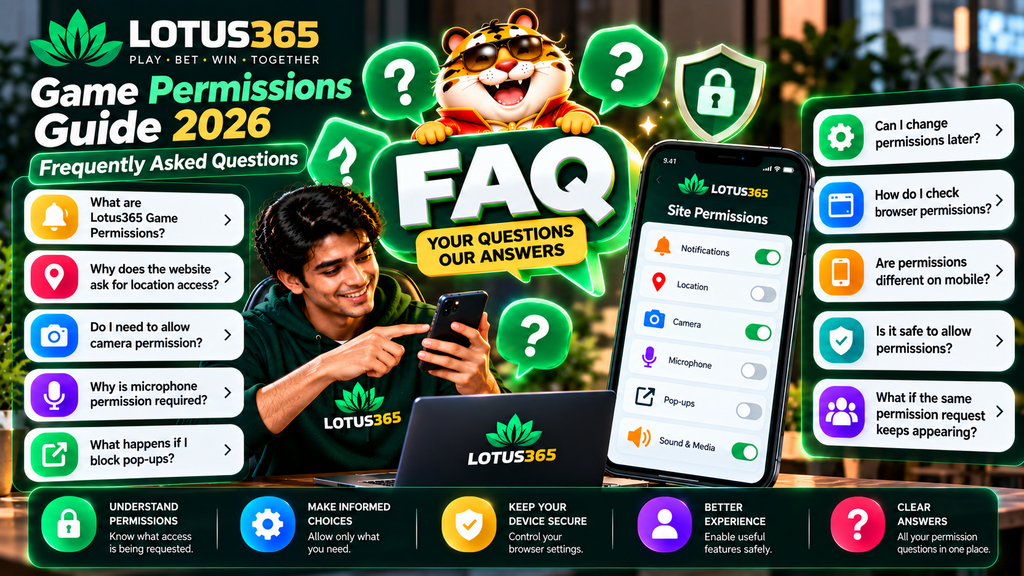
Frequently Asked Questions
What are Lotus365 Game Permissions?
Lotus365 Game Permissions refer to browser or device access requests that may appear when a supported website feature needs access to a particular capability.
Should I allow every permission?
No. Review each request and decide whether the requested access is necessary for the feature you want to use.
Can I change a permission after allowing it?
In many browsers, website permissions can be reviewed and changed later through browser settings.
Why does a permission request appear?
A website feature may need access to a browser or device capability such as notifications, location, camera, microphone, or pop-ups.
What happens if I block a permission?
The website may continue working normally, but a feature that depends on that permission may not work.
Are browser permissions the same on every device?
No. Available permissions and controls can vary by browser, operating system, and device.
Should I allow location access?
Only consider allowing location access when you understand why the feature needs it, and you are comfortable providing that access.
Why does the same permission request appear again?
It can happen if a permission was blocked, browser settings changed, site data was cleared, or a feature requires access again.
Can I review permissions regularly?
Yes. Reviewing website permissions periodically can help you understand which websites have access to particular browser capabilities.
Conclusion
Understanding Lotus365 Game Permissions can make your browsing experience more predictable and easier to manage. Browser permissions are designed to give users control over features that may interact with device capabilities.
When a permission request appears, read it carefully, identify the requested access, consider why the feature may need it, and check the website before making a decision.
If you previously granted access and no longer want it, review your browser or device settings and change the permission where appropriate.
The most important principle is simple: understand the permission before granting it.