
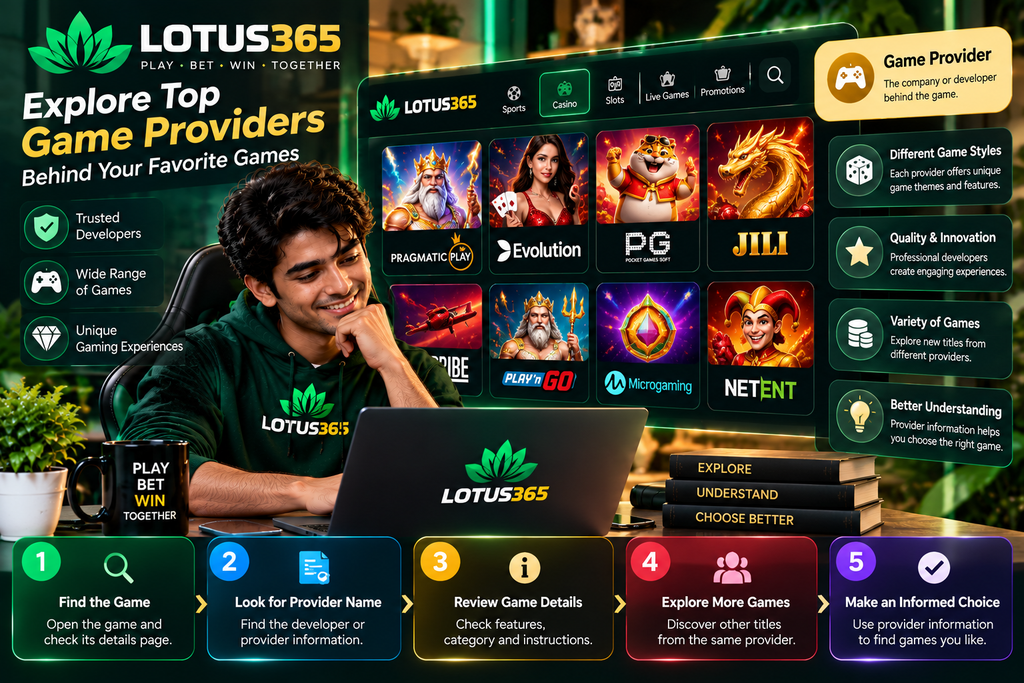
Choosing a game is not only about its title or category. Some users also want to know who developed or provided a particular game before exploring its available features. Lotus365 Game Provider information can help users understand the source associated with a game and organize their research more effectively.
A provider name may appear alongside a game title, category, or information panel. However, the availability and presentation of provider details can vary between games and platforms. This guide explains what game provider information means, where users may find it, and what details are worth checking.
What Is a Lotus365 Game Provider?
A game provider generally refers to the company, studio, or developer associated with creating or supplying a particular game.
Provider information can help distinguish between games with similar themes or names. It can also give users another way to organize the games they are researching.
When available, provider information may appear near:
- Game titles
- Game categories
- Game information sections
- Game descriptions
- Game menus
- Information or details panels
The exact layout can vary depending on the game and platform.
Why Check Game Provider Information?
Checking provider information can add useful context before exploring a game.
It may help users:
- Identify the associated developer or studio
- Distinguish between similar games
- Understand where a game originates
- Find other games associated with the same provider
- Organize games according to their source
- Review additional information before making a decision
Provider information should be considered alongside other available game details rather than used as the only factor.
How to Find the Game Provider
The first step is to open the relevant game information area.
Look for labels such as:
- Provider
- Developer
- Studio
- Game Studio
- Publisher
- Developed By
If the information is available, it may be displayed near the game description or within a separate information panel.
Users should avoid assuming a provider based only on the game’s visual design or name. Check the available information directly whenever possible.
Check the Game Title First
Before reviewing provider information, confirm that you are looking at the correct game.
Similar names can sometimes make it difficult to distinguish between different titles.
Check:
- Exact game name
- Game thumbnail
- Category
- Description
- Available information
- Provider or developer name
Confirming the title first helps prevent confusion when comparing multiple games.
Understand the Difference Between Provider and Platform
A game provider and a gaming platform are not necessarily the same thing.
The platform is where users access available games, while the provider or developer may be associated with creating or supplying a specific game.
Understanding this distinction makes game information easier to interpret.
For example:
Platform → Game → Provider/Developer
This simple structure can help users understand where different pieces of information fit.
Review Provider Information With Game Details
Provider information becomes more useful when viewed together with other game details.
Depending on what is available, users can review:
- Game category
- Description
- Instructions
- Features
- Interface controls
- Compatibility information
- Rules
- Provider or developer
- Other displayed specifications
Looking at the complete information gives better context than focusing on one label.
Look for Consistent Information
When researching several games, compare the information presented for each title.
You may notice differences in:
- Provider names
- Game categories
- Available descriptions
- Feature lists
- Instructions
- Interface design
These differences can make it easier to organize your research and identify games that share similar characteristics.
Explore Games From the Same Provider
If the platform displays provider information, users may sometimes discover multiple games connected with the same developer or studio.
This can be useful when researching a particular style or type of game.
Instead of searching randomly, you can note the provider name and then check whether other available titles have the same provider.
Always review each game’s information because games from the same provider can still have different features, rules, interfaces, and specifications.
Check Whether Provider Information Is Available
Not every game page necessarily displays the same amount of information.
If a provider name is not shown, do not assume one.
Instead:
- Check the game information section.
- Review the description.
- Look for developer or studio labels.
- Check available information menus.
- Use only information that is clearly provided.
This approach keeps your research based on identifiable information.
Avoid Confusing Provider Names With Game Names
A provider name can sometimes look similar to a game title, brand, or category.
Before recording information, identify what each label represents.
A simple research note can look like this:
InformationExample
Game Title Specific game name
Category Game category
Provider Developer or studio
Features Available features
Instructions Available guidance
This makes your notes easier to understand later.
Use Provider Information for Organization
Provider information can also help organize a personal list of games.
For example, you could create groups based on:
- Provider
- Category
- Game type
- Features
- Availability
- Device compatibility
This approach can make it easier to review multiple titles without relying only on memory.
Review Current Information Before Exploring
Game information can change over time. A title may receive updates, interface changes, or revised information.
Before exploring a game, review the information currently displayed on the platform.
Pay particular attention to:
- Updated descriptions
- New features
- Changed instructions
- Provider information
- Compatibility details
- Current terms or notices
Using current information helps avoid relying on outdated descriptions.
Keep Provider Information in Perspective
A provider name is useful for identification, but it does not automatically tell you everything about a game.
Two games from the same provider may have completely different:
- Designs
- Rules
- Features
- Interfaces
- Instructions
- Compatibility requirements
Therefore, review the individual game information instead of making assumptions based only on the provider.
Quick Checklist Before Exploring a Game
Use this checklist when reviewing a game:
- Confirm the exact game title
- Check the category
- Look for provider or developer information
- Read the available description
- Review instructions
- Check listed features
- Understand the interface
- Review compatibility information
- Check relevant rules and notices
- Use current information
This simple process can make game research more organized and easier to understand.
Frequently Asked Questions
What is a Lotus365 Game Provider?
A Lotus365 Game Provider refers to the developer, studio, or company associated with creating or supplying a particular game. The exact provider information depends on what is displayed for the individual title.
Where can I find game provider information?
If available, provider information may appear in the game’s information panel, description, details section, or near the game title.
Is the game provider the same as the platform?
Not necessarily. A platform provides access to available games, while a provider or developer may be associated with an individual game.
Can games from the same provider have different features?
Yes. Games associated with the same provider can have different designs, rules, features, interfaces, and instructions.
Should I rely only on provider information?
No. Provider information is only one part of game research. Review the complete information available for the specific game.
What should I check besides the provider?
You can also review the game title, category, description, instructions, features, interface, compatibility information, and applicable rules or notices.
Conclusion
Understanding Lotus365 Game Provider information gives users another useful way to research and organize game details. A provider name can help identify the developer or studio connected with a title, distinguish similar games, and discover other related titles.
However, provider information should always be considered together with the individual game’s description, features, instructions, compatibility, and other available details. Taking a few moments to review these elements can make your game research more structured and informed.